
With the impending sunsetting of my old faithful Dexcom G6, I had a choice to make: switch to the G7 or try the Eversense. I’ve worn a lot of diabetes tech in my life, but the Eversense 365 both intrigued and terrified me. The procedure itself, the year-long commitment, and the unknown scared me a bit, but after reading tons of positive reviews, I decided to take the plunge.
I had my Eversense 365 inserted on March 27, 2026. In the article, I’ll cover how the insertion procedure went, what I love about the Eversense, what I wish were different, and if I would do it again.
Please note, this post is not medical advice. Make sure to consult with your healthcare team before making any changes to your diabetes management routine. This post is not sponsored, however some of the links below may contain affiliate links. This means that if you click on a link and purchase a product, I may get a small commission at no cost to you.
What is Eversense 365?
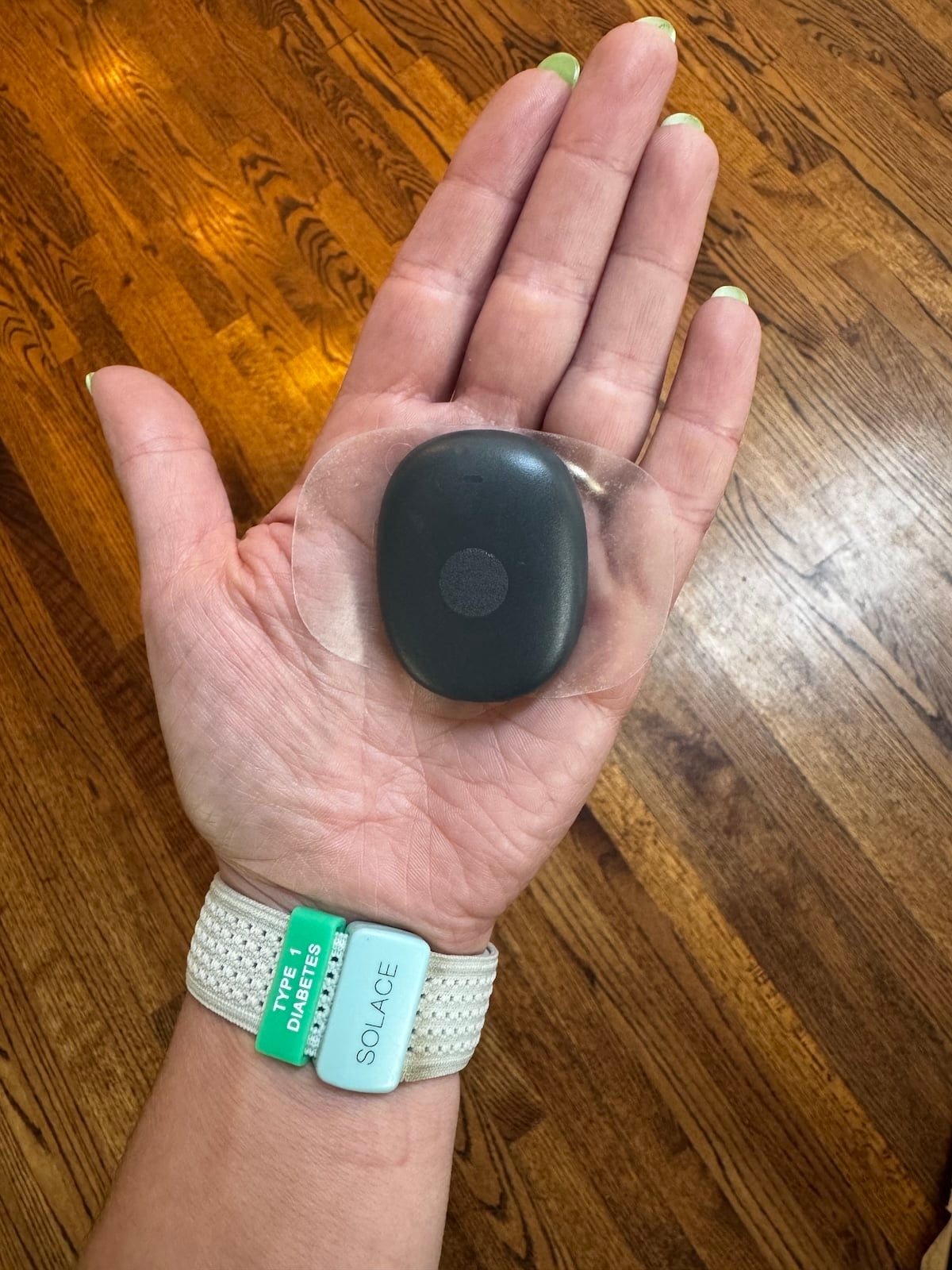
Eversense is an implantable CGM that consists of a small sensor inserted under the skin by a trained clinician, a removable external transmitter that sticks to the skin over the sensor, and a smartphone app that displays your blood sugar. The “365” refers to the intended wear duration of one year.
At this time, Eversense 365 is only FDA-approved for wear in the upper arm, but I have heard of people wearing it off-label in other locations. Sensor insertion and removal are minor outpatient procedures.
My Experience: Insertion and the First Week
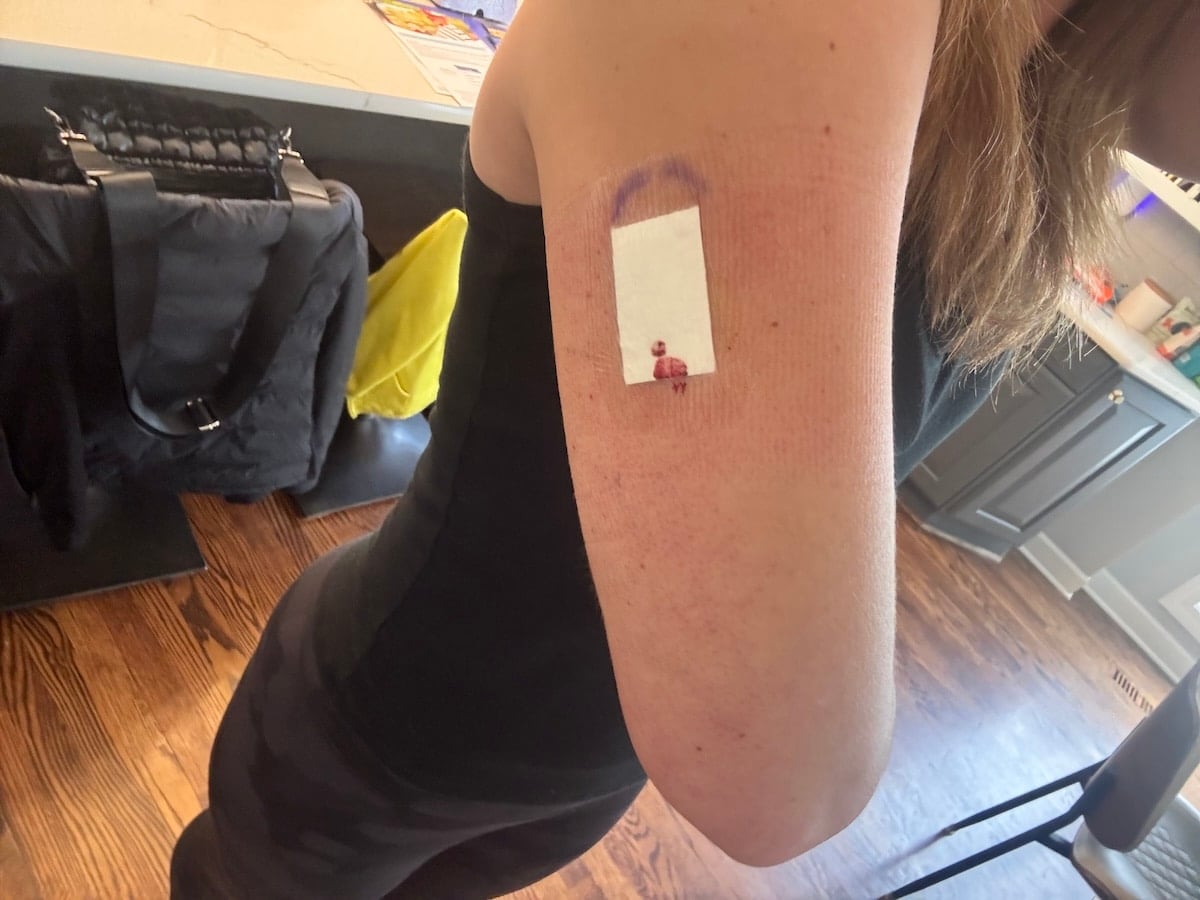
The appointment was a quick outpatient procedure with a nurse practitioner. She injected a local anesthetic, and I felt pressure more than pain. She first marked and numbed my arm, inserted the sensor with a small incision, and covered it with steristrips and a tegaderm. There was a little discomfort for a day or two, but I was never in pain.
I was sent home with a box that contained the charger and enough extra silicone adhesive patches for the full year, as well as a folder with instructions and information.
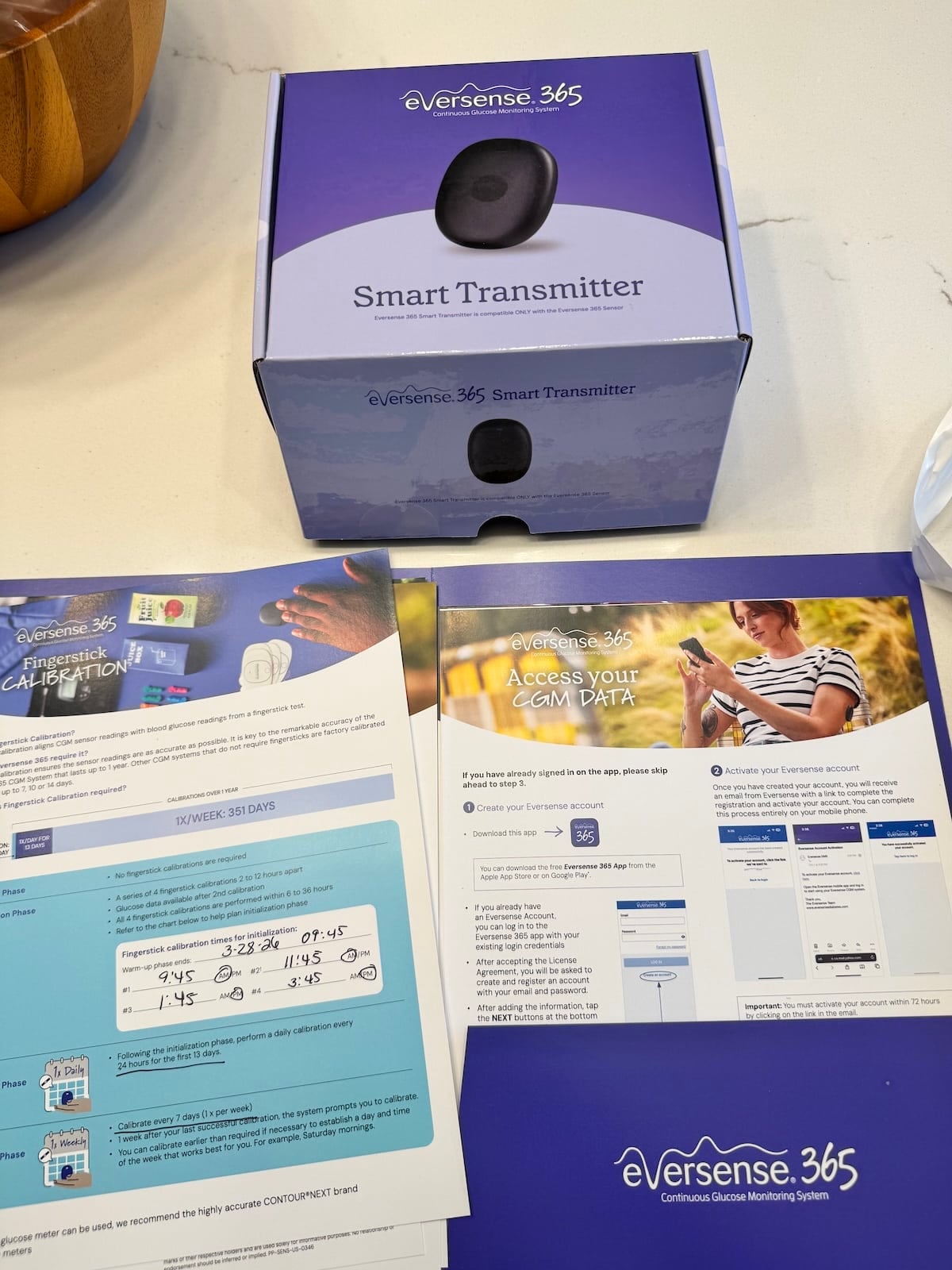
After the insertion, my skin around the site was mildly tender and a tiny bit bruised. The transmitter setup and pairing with the app were straightforward. The system required 4 calibrations after the first 24 hours to start producing readings, then 1 calibration daily for 14 days, and now just 1 calibration weekly.
While my readings were a bit all over the place for the first couple of days, by day 4 or 5, it seemed to settle in and has been incredibly steady and accurate since.
Coverage seems to vary right now, and prior authorizations and appeals may be needed. Check your plan and ask about insertion, sensor, and transmitter costs. Keep in mind you only have to pay for the system once per year, rather than every 1-3 months. The insertion procedure was a flat fee of $99 for me, and I am still waiting on a final bill from my insurance for the rest, though I was quoted $199 for the sensor and transmitter.
What I Love About Eversense
Below is a list of some of the things I have really been enjoying:
- Accuracy: This is listed as #1 for a reason and is probably my favorite thing about the Eversense 365. My previous sensors were often quite inaccurate, particularly on the first day or two after insertion. The Eversense 365 has been rock-solid and steady, generally within 10 points of my fingerstick readings when I check. This gives me such peace of mind, especially when using a closed-loop system that adjusts insulin for me based on sensor readings.
- Comfort: Once the incision healed, there has been literally no pain or discomfort. I honestly forget that the sensor is there!
- On Body Vibration: I have grown to love the on-body vibration. It is great for noisy situations where I may not hear my phone, during work meetings when I want to be more discreet, or when my phone is out of range of the sensor (the transmitter still vibrates for blood sugar alerts if your phone is out of range).
- Ease of Use: It is SO easy to use! All I have to do is charge the transmitter once every couple of days for about 10 minutes. I have started doing this each day while I shower.
- Easier for Travel: The Eversense has made travel much easier, since all I need to pack is my charger and a few extra adhesive patches.
- Gentle Silicone Adhesive: I used to have to rub away at the black, tacky adhesive left by previous sensors on my skin after removing them. Now the silicone adhesive easily and painlessly pulls right off my skin, and I can reattach it or change adhesive patches anytime.
- Integration with Twiist and Loop: Twiist is one of my favorite FDA-approved closed-loop systems on the market. The fact that Eversense communicates with Twiist is a HUGE win! The fact that I can now use DIY loop with it is even better.
- No Compression Lows: Now I can sleep however I want, without worrying about pesky compression lows!
My Wish List
Though none of these are deal breakers, there are a few things I wish the Eversense could do differently. Here is my wishlist:
- Improved Alerts: I wish there were more options for customizing alerts. At this time, you can’t set a high alert below 180 (I prefer 150), and there aren’t a ton of sound options to choose from. I ended up downloading a third-party app called Sweet Dreams that allows for more customized alerts. Occasionally, I have trouble not waking up overnight from alerts. A Sugar Dash 2 with audible alerts is on my wish list to help with this!
- Updated app: Though it functions well, the Eversense 365 app feels a bit outdated.
- Improved integration with DIY Loop: Though I expect this to improve over time and I am THRILLED that I can use my Eversense 365 with loop, the integration leaves a lot to be desired right now. I am not able to see the changing trend arrows in the Loop app (I have to check Sweet Dreams or Nightscout to see them). I can’t use the Eversense app while connected to Loop, and I can’t share my blood sugar with Eversense Now or with my circle right now.
- Insertion/Removal Logistics: Requires clinic visits and a minor procedure; this was not a huge deal for me, but I know that not everyone wants that.
- Size: The Eversense transmitter is larger and more noticeable than many of the newer CGMs on the market, such as the Freestyle Libre 3+ or the Dexcom G7.
Final Verdict: Would I do it Again?
Short answer: YES!
Honestly, I can’t imagine going back to any other sensor at this point. I truly appreciate the convenience of a long-term implanted sensor and the peace of mind that comes with steady CGM coverage. The procedure and logistics were minor compared with the months of worry and pain-free wear.
If you value convenience and can navigate the provider and insurance piece, it’s 100% worth trying. I am looking forward to better and more vast insulin pump integrations and future models that won’t require an external transmitter, but for now, I am incredibly grateful for this incredible piece of technology.